


Fire Alarm Systems for Business in Georgia: Regulations, System Selection, Ordering Installation
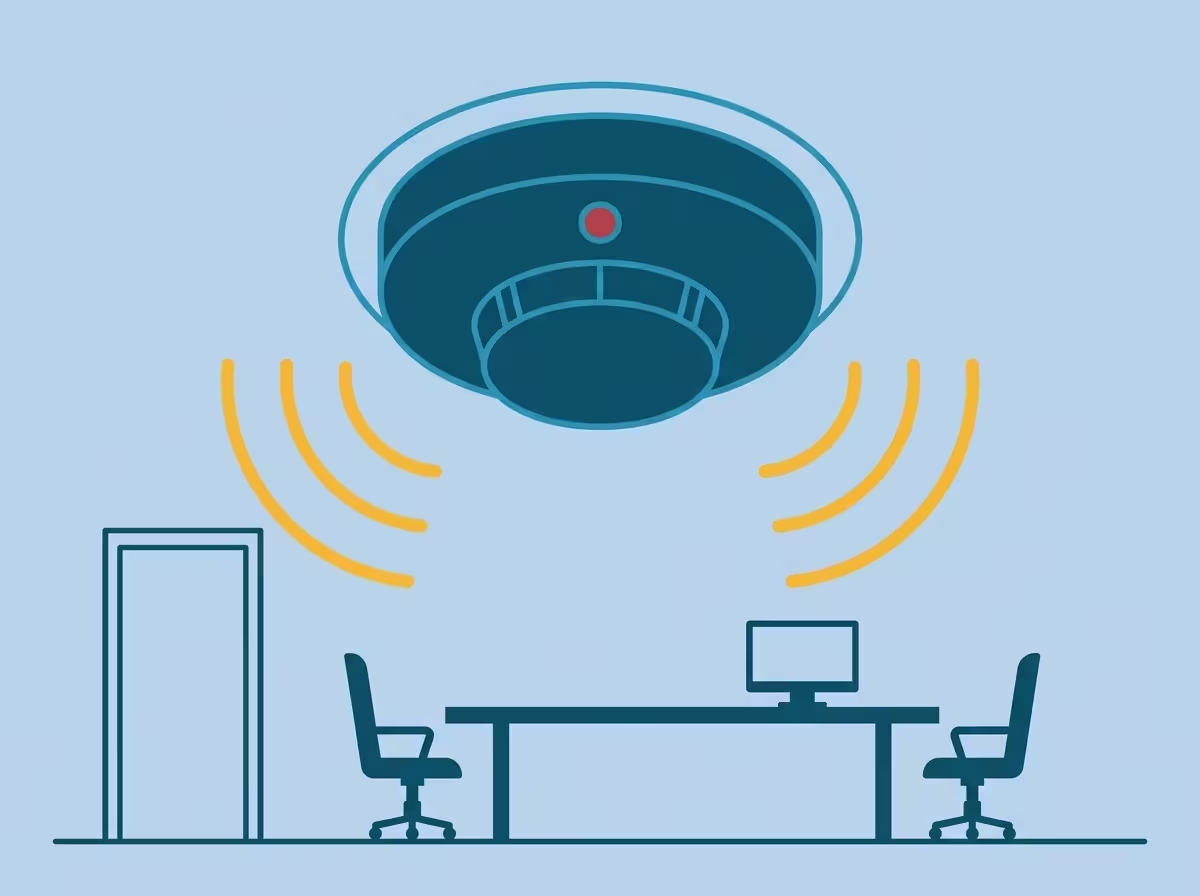
Every owner of a commercial facility in Georgia, sooner or later, faces the issue of fire alarm systems.
It is not a question of “whether it is necessary,” but rather “when to install it and how to pass inspection.”
For most facilities—shops, restaurants, hotels, warehouses, business centers, and production areas—installing a fire alarm system is a legal requirement, not a choice. Please verify the specific list of facility types required by Georgian legislation to install fire alarms with fire safety specialists. This article does not replace legal advice and is not an official document.
What a business stands to lose in the event of a missing or non-compliant system: fines based on inspection results, suspension of operations until violations are corrected, refusal of insurance payouts in case of a fire, reputational damage, and risks to the lives of employees and visitors. Proactively ordering a fire alarm system is cheaper than dealing with the consequences of an incident or an inspection notice.
Next, we will discuss which facilities are required to have the system, how to choose between addressable and conventional (zonal) types, what is included in the kit, and how to order installation for a specific facility.
Which facilities in Georgia are required to install fire alarm systems

The categories of facilities for which installing a fire alarm system is mandatory are defined by Georgian fire safety norms. Below is a general list provided without legal conclusions. The exact requirements for a specific facility are determined by a fire safety specialist after an inspection.
Public and Commercial Facilities
Shops and supermarkets with an area exceeding a certain threshold, shopping centers, markets, and consumer service facilities with mass visitor traffic. For commercial facilities, it is critical to connect the fire alarm to the visitor notification system: during an alarm, people must leave the building in an organized manner via evacuation routes.
Hotels, Restaurants, and HoReCa Facilities
Hotels, family hotels (guesthouses), restaurants, cafes, and banquet halls. Requirements for hotels are stricter due to the presence of people staying overnight: the fire alarm must operate on every floor, in every room, and in service areas. According to the norms, it is impossible to install a fire alarm for a hotel without integration with a warning (notification) system.
Manufacturing and Warehouses
Production workshops, storage areas, hangars, and material storage facilities. For production and warehouses, the correct selection of sensor types is important: smoke detectors work poorly in places with high dust content; thermal detectors are suitable where smoke is a normal technological background. It is impossible to buy a fire alarm for a warehouse or production facility without an inspection of the site.
What happens in the absence of norms or in case of non-compliance
Please verify specific fines and sanctions with the fire inspection or a fire safety lawyer. Typical consequences include financial fines, orders to eliminate violations within a set deadline, suspension of the facility’s operations until corrections are made, and refusal of insurance payouts by insurance companies in the event of a fire. Installing a fire alarm before an inspection is ten times cheaper than after.
Addressable or Zonal (Conventional) Fire Alarm: What to Order for Your Facility
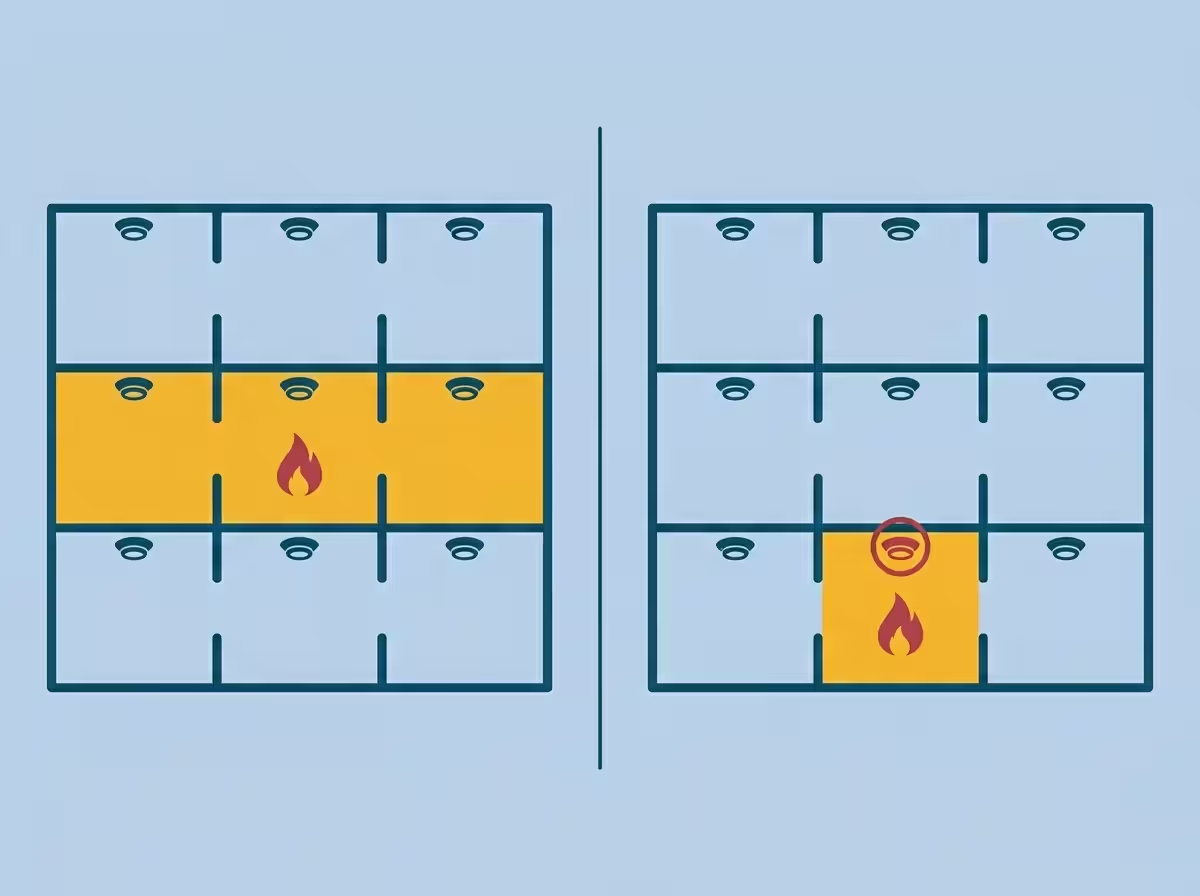
When choosing a fire alarm system, there is a fundamental choice: zonal (conventional) or addressable. The answer determines the price of the kit, the accuracy of locating the fire, and the ease of maintenance.
Zonal System: How it works and where it is used
All sensors from one zone (room, floor, section) are connected to one common loop. When any sensor is triggered, the panel shows: “Zone 3 triggered.” The panel cannot identify the specific sensor within the zone. An employee or the fire department goes to the zone and searches for the source visually. The zonal system is simpler, cheaper to install, and easier to maintain. It is suitable for small facilities with a small number of areas: a shop, restaurant, small office, or small warehouse with open zones. Buying a zonal fire alarm for a shop will cost 1.5–2 times less than an equivalent addressable system.
Addressable System: How it works and why it became the standard
Every sensor has its own unique address. Upon activation, the panel displays: “Sensor number 47, second floor, corridor near the conference room.” The fire source is localized instantly without searching within a zone. The addressable system is more expensive at the procurement stage, but it provides critical advantages for medium and large facilities. Localization accuracy reduces fire department response time. During maintenance, each sensor is diagnosed separately; if one fails, it is immediately visible on the panel. The addressable system scales to hundreds of sensors without losing management convenience.
When is zonal sufficient, and when is addressable necessary
Zonal system: Shop, cafe, small production, small to medium-sized warehouse, small office with one or two zones. Addressable system: Hotel, business center, shopping center, medium and large office, large production, large area warehouse with several sections. For facilities where connection to a notification system is mandatory according to regulations, an addressable system is usually required.
What is included in a fire alarm system: Kit analysis
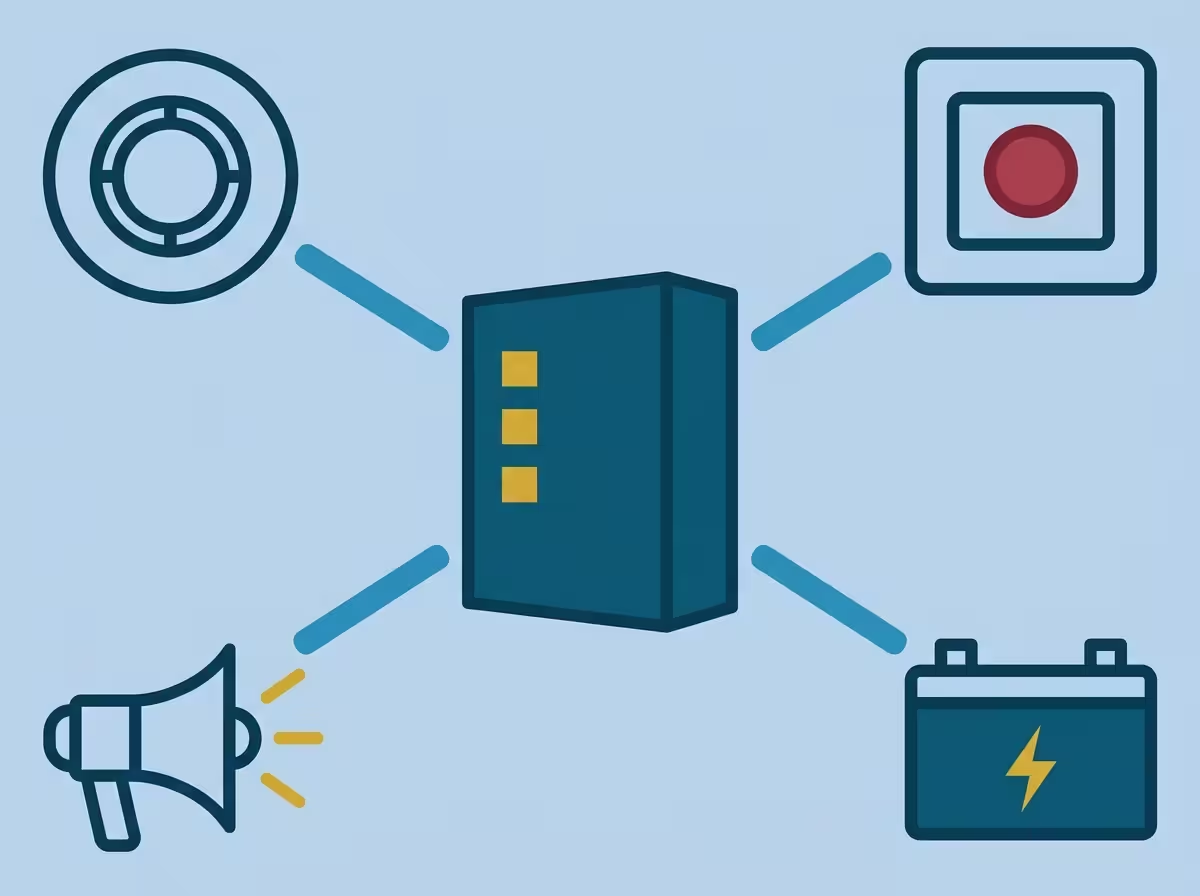
A complete fire alarm system consists of five types of devices. Each element performs its function; without any of them, the system will not pass certification.
Fire Alarm Panel (Central Control Panel)
The electronic brain of the system. It receives signals from all sensors, processes them according to given algorithms, initiates notification, transmits the signal to the fire department, and records all events in a log. The panel operates around the clock and has backup power for 24–72 hours without external mains, depending on the model. You can select a fire alarm panel for your facility in the “Fire Alarm Panels” section.
Smoke and Heat Detectors
A smoke detector reacts to smoke particles in the air. It is suitable for offices, hotel rooms, corridors, and shopping halls. A thermal detector reacts to temperature exceeding a set threshold or the rate of its rise. It is suitable for production buildings, kitchens, garages, and buildings with dusty or smoky technological environments where smoke detectors would trigger false alarms. Combined detectors integrate both functions into one device and are used in critical facilities. You can order smoke or thermal detectors in the “Detectors” section.
Manual Call Points and Sirens
A manual call point is a red alarm button in a protective housing, installed in corridors, near exits, and in public places. A person who notices a fire breaks the protective glass and presses the button. The signal immediately goes to the panel and the notification system. Sirens and audible notifications are triggered from the panel during an alarm. According to regulations, the sound volume must cover the background noise in the room. In large facilities, sirens operate as part of a general notification system with zoning. You can select manual call points and sirens in the “Sirens and Alarm Buttons” section.
Backup Power Supply and Line Modules
Rechargeable batteries ensure the system operates in case of main power failure. Line modules, repeaters, and short-circuit isolators ensure the reliability of the system in large facilities with long loops. All auxiliary elements are in the “Accessories” section.
Connecting Fire Alarms to Evacuation and Access Control Systems
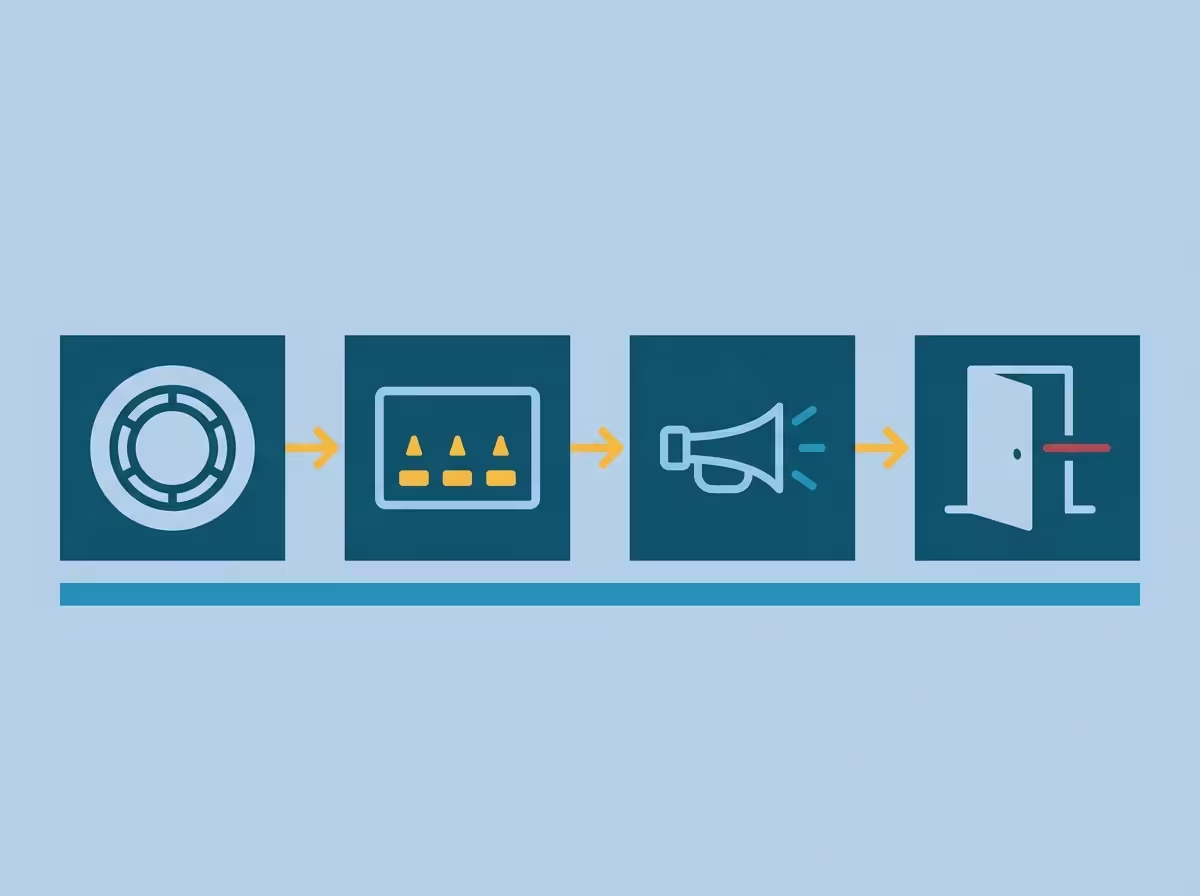
Modern fire alarm systems do not work in isolation. For facilities where the area and the number of people exceed a certain threshold, regulations require integrating the fire alarm with public address and evacuation systems, as well as access control systems.
Fire Alarm System Operation Scenario (Step-by-Step)
A smoke detector in the second-floor corridor of a hotel detects smoke. The signal is sent to the fire alarm panel. The panel identifies the detector’s address, checks conditions (verifies it is not a false alarm), and initiates the alarm scenario.
Audible notifications are activated by zone: first on the floor with the fire and the floor above, then on the remaining floors with a 30–60 second delay to prevent panic. The access control system automatically unlocks doors on evacuation routes so people can exit freely. Emergency lighting and illuminated exit signs are turned on. The signal is transmitted to the fire department. Sirens sound outside the building for arriving teams.
From the first activation to the full engagement of all systems, 10–30 seconds pass. Without integration, these processes are manual, which is impossible in a real fire situation.
Integration with Evacuation Systems
The fire alarm and the notification system work together. The fire alarm panel activates amplifiers, speakers, and illuminated evacuation signs according to the defined zoning scenario. This is a regulatory requirement for most facilities mandated to have fire alarms. For more information on equipment, see the “Evacuation Systems” section.
Integration with Access Control Systems: Automatic Door Unlocking
When a fire alarm is triggered, all doors on evacuation routes controlled by electronic locks are automatically opened. Magnetic locks are deactivated, and electromechanical locks switch to the “normally open” state. This function is critical for office buildings, hotels, and shopping centers. You can select equipment for integration in the “Access Control Systems” section.
Equipment Selection and Installation: What Innotech’s Work Includes
Selection of equipment according to the approved project from the range of Teletek and other brands certified in Georgia. Delivery of the kit to the site within agreed timeframes. Installation of the panel, laying of cables, installation of sensors according to the project, installation of sirens and manual call points, and connection to notification and access control systems. Commissioning and testing of all alarm scenarios. Handover of the system to the client and acceptance testing during inspections.
Warranty and Maintenance of Fire Systems
Manufacturer’s warranty on equipment based on specific terms. Innotech’s warranty on installation work. Regular system maintenance under a service contract: testing, checking sensors and backup power, and replacing consumables. Without regular maintenance, a fire alarm system gradually loses its reliability.
What to Prepare Before Installing a Fire Alarm System
Before your first conversation with the integrator, gather four key details:
Type and purpose of the facility: Shop, restaurant, hotel, warehouse, production, business center. The type of facility determines the applicable regulations and the composition of the system.
Facility area and the number of individual rooms or zones. This is the primary parameter for calculating the number of sensors and the system architecture.
Existence of a ready-made fire alarm project from licensed designers. If a project exists, installation can begin in a short time. If there is no project, Innotech will organize the design.
Integration requirements. Do you need a connection to a notification system, access control, or video surveillance? This affects the kit’s composition and budget.
With this information, a call to Innotech will take 10–15 minutes, and you will understand the scope of work and the estimated cost. A precise cost estimate is prepared after a specialist visits the site.
Order fire alarm installation in Tbilisi: +995 595 532 112.
Select equipment in the catalog – Fire Alarms. Free site inspection in Tbilisi.
Author: Morris Melia Co-founder and CTO of INNOTECH, Tbilisi. 25+ years of experience in the field of IT and security technologies. Certified partner of Hikvision, Dahua, Uniview, and Teletek. Holder of Cisco CCNA and VMware VCP certificates. Personally led hundreds of projects for business centers, hotels, residential complexes, and industrial facilities in Georgia.