


Wireless Home Security Systems: How to Build a Reliable System from Scratch

Whether it is a private house or an apartment, it is a sanctuary where everyone enjoys complete peace of mind, privacy, and safety.
We invest significant effort and resources into interior design, purchasing household appliances and gadgets, and creating a comfortable atmosphere for our families. Yet, amidst the noise and bustle of daily life, company directors, entrepreneurs, and private individuals often relegate property protection to the background, relying instead on the perceived reliability of entrance doors, complex locks, or the vigilance of neighbors.
Experience shows that the lack of professional security technology turns property protection into a high-risk gamble. Facing theft, flooding, or fire is always deeply stressful, leading to significant, unforeseen expenses and a lengthy recovery process. A modern, cost-effective solution for protecting your property is the installation of wireless security systems. These operate autonomously, require no cabling, and instantly alert the owner to any incident. In this article, we will detail how to build an effective security system from scratch, even if you have never used such devices before.
Why an apartment without an alarm system is a gamble, not a saving
Many homeowners are tempted to believe that a high-quality security door and a few modern locks are sufficient to fully protect their property from intrusion. Unfortunately, for a determined robber, breaking even a complex mechanical lock is just a matter of time. Physical barriers merely delay an intruder; they cannot stop them unless the building is equipped with electronic sensors capable of instantly detecting an intrusion.
The decision not to install security systems is often driven by a desire to save money. However, such savings are illusory. The damage caused by a single visit from intruders usually exceeds the cost of the most advanced security system tenfold. Furthermore, modern home threats are not limited to intruders. Internal utility failures are just as dangerous:
Hidden water leaks caused by broken pipes or faulty household appliances, which can damage not only your property but also that of neighbors downstairs;
Unexpected fires caused by faulty wiring, left-on appliances, or safety violations regarding fire;
The spread of dangerous carbon monoxide, which is invisible and odorless but poses a deadly threat to the life and health of every family member.
When an apartment or house is left unattended during a workday, vacation, or business trip, the owner remains uninformed. They only learn about an incident once the damage has reached a critical level. This is why installing a wireless emergency alarm system is not an unnecessary luxury, but a necessity and a smart investment in your peace of mind. If you want to protect your home, it is important to purchase a wireless home alarm system in a timely manner and entrust the monitoring of your property to automated technologies.
How a wireless system works, using the main controller as an example
The main advantage of modern security solutions is that they are completely wireless. This means you can install a fully functional security system at any time, even if your apartment or house has already undergone a high-end designer renovation. There is no need to cut into walls, install cable ducts, or distort your interior aesthetics. All components connect via a secure radio channel, and control is managed through a convenient application installed on your mobile phone.
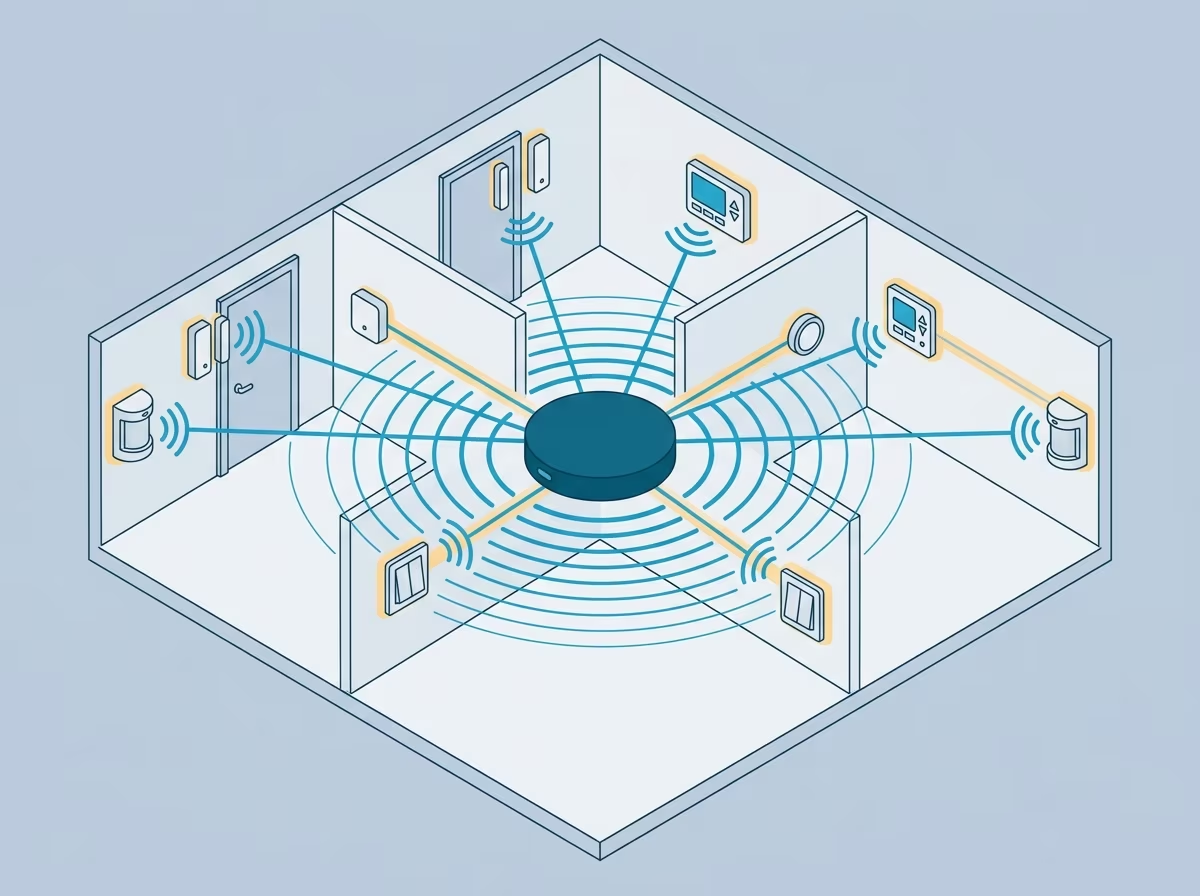
The architecture of a wireless system is built around one central device—the main controller—which acts as the “brain” of the entire network (the Ajax Hub is a prime example of such a device). This unit is installed in an inconspicuous location and is connected to both the power grid and the internet. It constantly polls all connected sensors, analyzes incoming data, and makes instantaneous decisions.
The system works as follows:
Event Detection: If a door sensor detects an opening, or a room sensor detects motion, they immediately send an alarm signal to the main control device via an encrypted radio protocol.
Analysis and Filtering:
The controller processes the signal in milliseconds. Advanced algorithms protect the system from false alarms—for example, they can ignore the movement of pets or curtains fluttering in a draft.
Instant Notification: The central unit utilizes redundant communication channels, simultaneously using wired internet, Wi-Fi, and GSM mobile networks.
If the home internet connection is lost or power fails, the device continues to operate on its built-in backup battery and sends a notification to the owner’s phone via the mobile network.
Thanks to this design, you always know exactly what is happening at home. If you are looking for the most reliable way to protect your property, the best solution is to install an Ajax security system, which is considered a world leader in wireless security due to its reliability and ease of use.
Which sensors are essential? Assembling a basic kit
To build an effective security system from scratch, you do not need to purchase dozens of specialized devices from the start. For the basic security of a standard city apartment or small house, assembling a starter kit that covers the main risk areas is sufficient.
Entrance Zone and Perimeter Control
The first line of defense is securing the main entrance. Statistics show that most criminals use the main door to enter a building. To monitor this zone, a wireless door contact sensor, such as the Ajax DoorProtect, is used. It consists of two compact components (a magnet and a sensor with a reed switch) that are installed on the door frame and the door leaf. As soon as the door is opened even a few centimeters, the circuit is broken, and the system instantly triggers an alarm.
Monitoring Internal Spaces
The second area to consider is the home interior. It is important to place motion sensors correctly here. They should be installed in areas where people are likely to pass: in hallways, living rooms, or near windows if the apartment is on the first or top floor. If you are choosing a motion sensor for your apartment, look for models with a wide viewing angle and a built-in feature that prevents false alarms caused by pets, ensuring the system does not disturb you while you are away.
Fire Protection and Air Quality Control
Home safety is not just about protection against theft, but also about preventing household accidents. Wireless smoke and heat detectors are an essential part of any modern security system, such as the Ajax FireProtect model and the updated FireProtect 2 series sensors. These devices operate continuously, even when the main alarm system is disarmed. They instantly detect a sharp rise in temperature or the presence of smoke in the room. It is also recommended to install a special CO (carbon monoxide) detector, which will warn you in time about dangerous concentrations of toxic gas and potentially save the lives of the residents.
What factors determine the cost of a wireless emergency alarm system?
When a consumer begins to explore the security equipment market, they naturally ask: What determines the final price of an emergency system with mobile notifications, and is it possible to reduce these costs without compromising quality? The cost of a wireless security system is always calculated individually and depends on several key factors.

The final cost of the system is influenced by the following factors:
Number of rooms and facility layout: The more rooms, windows, and entrance doors there are, the more perimeter sensors and motion detectors will be needed to fully eliminate blind spots.
Main controller functionality: Basic control panel models are cheaper but have limitations on the number of supported devices.
Extended versions (e.g., controllers with alarm photo-verification support) are more expensive but allow you to connect sensors with built-in cameras, which send a series of images directly to your smartphone in case of an alarm.
Availability of additional security modules: Adding smart plugs, automatic water shut-off valves in case of leaks,
or powerful outdoor sirens to the system increases the total cost, but transforms the security system into a comprehensive home automation ecosystem.
For small spaces or strictly limited budgets, a basic wireless GSM alarm kit can be an excellent starting point; this includes a minimum set of devices to protect one or two zones and send notifications to a mobile phone. In the future, such a system can be gradually expanded by purchasing necessary sensors as the need arises.
Stages of Proper Installation of a Security System in Residential Areas
Although wireless devices are physically easy to install (they can be attached to walls with special double-sided tape or small screws without damaging the surface), the process of programming and configuring the wireless network requires a professional and thorough approach. To ensure stable and uninterrupted system operation, its implementation must go through several important stages.
First, a detailed analysis of the facility’s layout is performed. Experts determine the optimal mounting location for the main controller—it must be at an equal distance from all peripheral devices so that the radio signal is distributed evenly and is not weakened by thick, reinforced walls or metal doors. Then, each sensor is connected to the mobile application by scanning QR codes and assigning devices to virtual rooms. After physical installation, signal strength and detection range tests are conducted for each sensor.
If you want to be absolutely sure that your home is reliably protected 24/7 and that all components are configured correctly, the best solution is to contact professional integrators. Qualified specialists will help you design the system correctly, test radio channels, and connect your devices to the monitoring center of a security company.
Recommended Sections and Useful Resources:
Security Systems Catalog — A full assortment of devices for protecting apartments, houses, and commercial premises.
Central Device: [See Ajax Hub specifications] — A reliable main controller for setting up a wireless security system.
Door and Window Protection — Wireless sensor for monitoring the main entrance.
Air Quality Monitoring — Specialized equipment to prevent poisoning from toxic gases.
Technology Comparison — A detailed comparative analysis of wireless security ecosystems and criteria for choosing different manufacturers.
Find the Ideal Security Solution for Your Home
Every property is unique, and standard, off-the-shelf solutions cannot always guarantee 100% security. Room layout, number of floors, the presence of pets, and the peculiarities of the building’s utility systems—all of this requires an individual approach when selecting devices.
Do not put off ensuring the safety of your family and property for tomorrow. Contact our technical specialists now by phone or send a request on our website. We will carefully study your home’s layout, help you develop an optimal sensor configuration, provide an accurate price quote, and select a reliable wireless kit that perfectly fits your needs and budget.
Order installation of a security alarm: +995 595 532 112
Author: Morris Melia Co-founder and CTO of INNOTECH, Tbilisi. 25+ years of experience in the field of IT and security technologies. Certified partner of Hikvision, Dahua, Uniview, and Teletek. Holder of Cisco CCNA and VMware VCP certificates. Personally led hundreds of projects for business centers, hotels, residential complexes, and industrial facilities in Georgia.