


Biometrics, Cards, or Mobile Credentials: What to Choose for Business
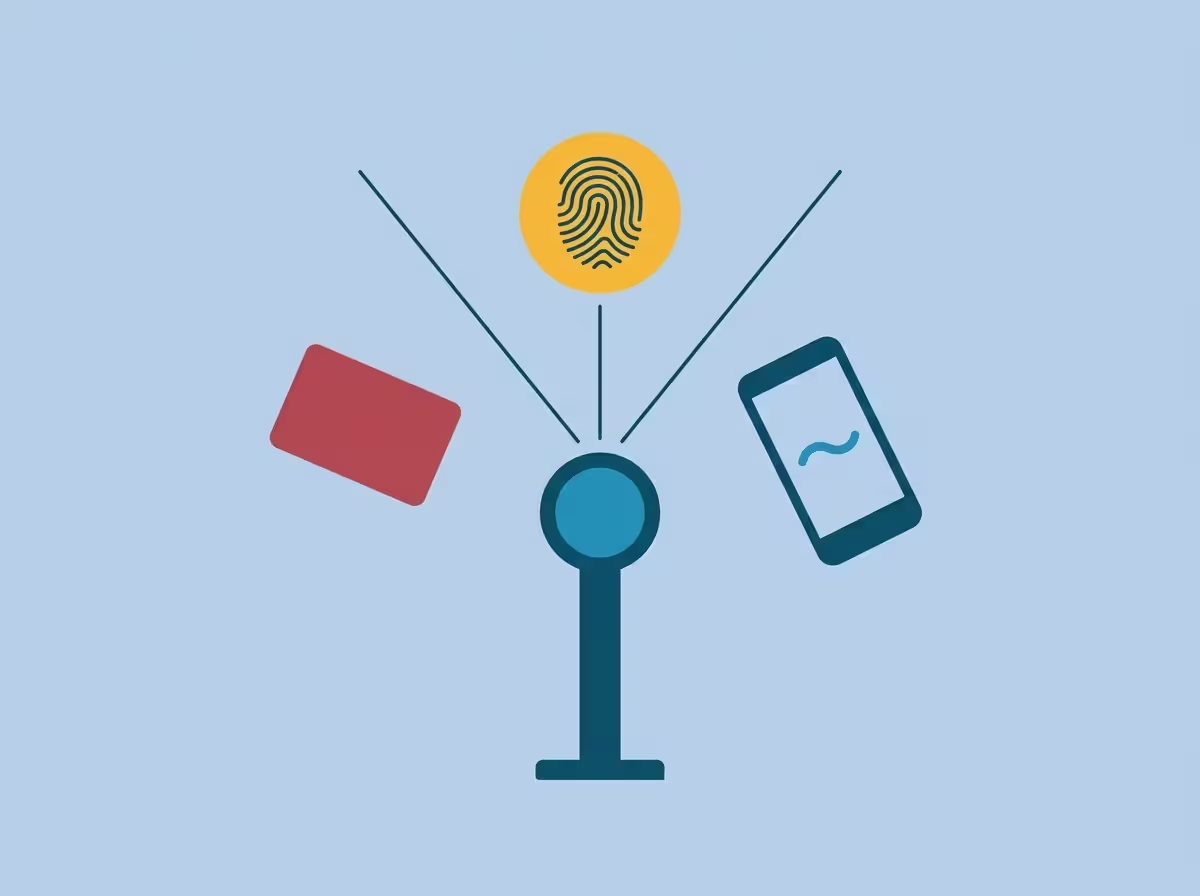
The method of identification is the key question when choosing an access control system. It is what determines the cost of the kit, employee comfort, passage speed, and protection against fraud.
You can order a card reader for 3-4 times cheaper than a biometric one, but a card can be passed to another person. Installing biometrics eliminates the possibility of passing a pass on, but it requires registering each employee. A mobile pass is the most convenient for guests, but it depends on the availability of smartphones and the internet.
There are three main methods used in the Georgian market: a card or key fob, biometrics via fingerprint or facial recognition, and a mobile pass via an application. The choice should be made based on the specifics of the facility and the type of users, rather than on the principle of “the more expensive, the better.” This article examines each option in terms of practical usage scenarios and will help you determine what to order for a specific facility.
Cards and RFID Key Fobs: When is this solution optimal?
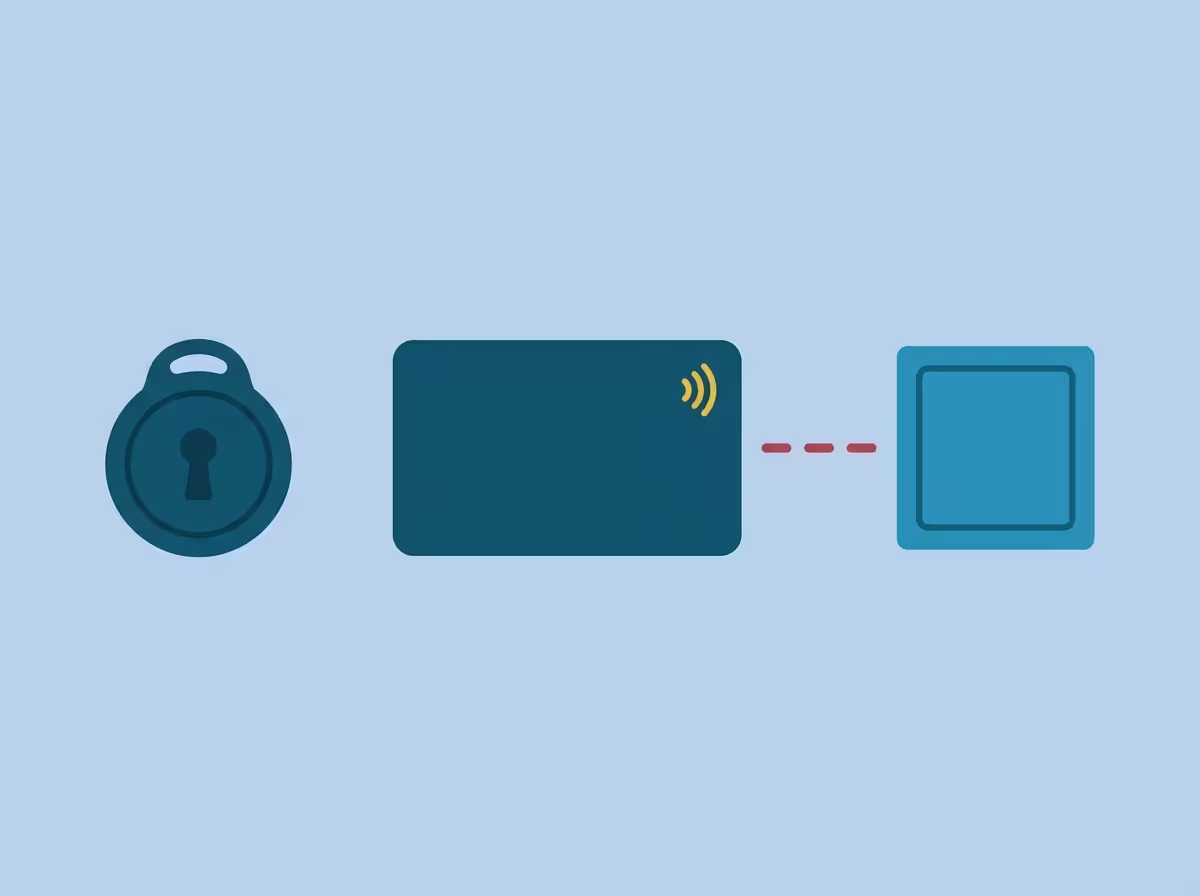
Cards work on radio frequency, with the reader receiving a signal at a distance of 2-5 centimeters. There are several standards: EM-Marin is the basic format—cheap and common, although protection against copying is weak, and it can be duplicated in practically any watch repair booth. Mifare is a modern standard with encryption, which requires special equipment and knowledge to copy. HID is the premium segment, used for facilities with high security requirements.
How much does it cost to purchase cards for an office?
The cost per card ranges from 0.5 to 8 GEL depending on the standard. A batch of Mifare cards for 100 employees costs approximately 200-600 GEL. A new employee receives a pass in 5 minutes: the card is programmed on-site via software and issued upon signature. The technology is familiar to everyone and requires no additional training.
Weaknesses
The card can be passed to others. An employee forgets their pass, a colleague hands over theirs, and attendance tracking becomes a mere formality. A card can be lost, left at home, or in a jacket at the dry cleaners. An EM-Marin card can be copied for about 10 GEL in almost any workshop. This does not mean cards are useless—they are simply a relatively weak solution for critical zones.
When should you order a card system?
Facilities with high staff turnover where issuing and canceling passes is constantly required: retail chains, warehouses, construction contractors. Facilities with temporary passes for guests: business centers with a reception, exhibition complexes. Facilities where the budget is limited and the main task of the access system is to restrict unauthorized persons, rather than personal accountability for each individual event. In Tbilisi, ordering the installation of a card system is possible from approximately 1,200 GEL for one door in a basic configuration.
Biometrics: Fingerprint or Facial Recognition
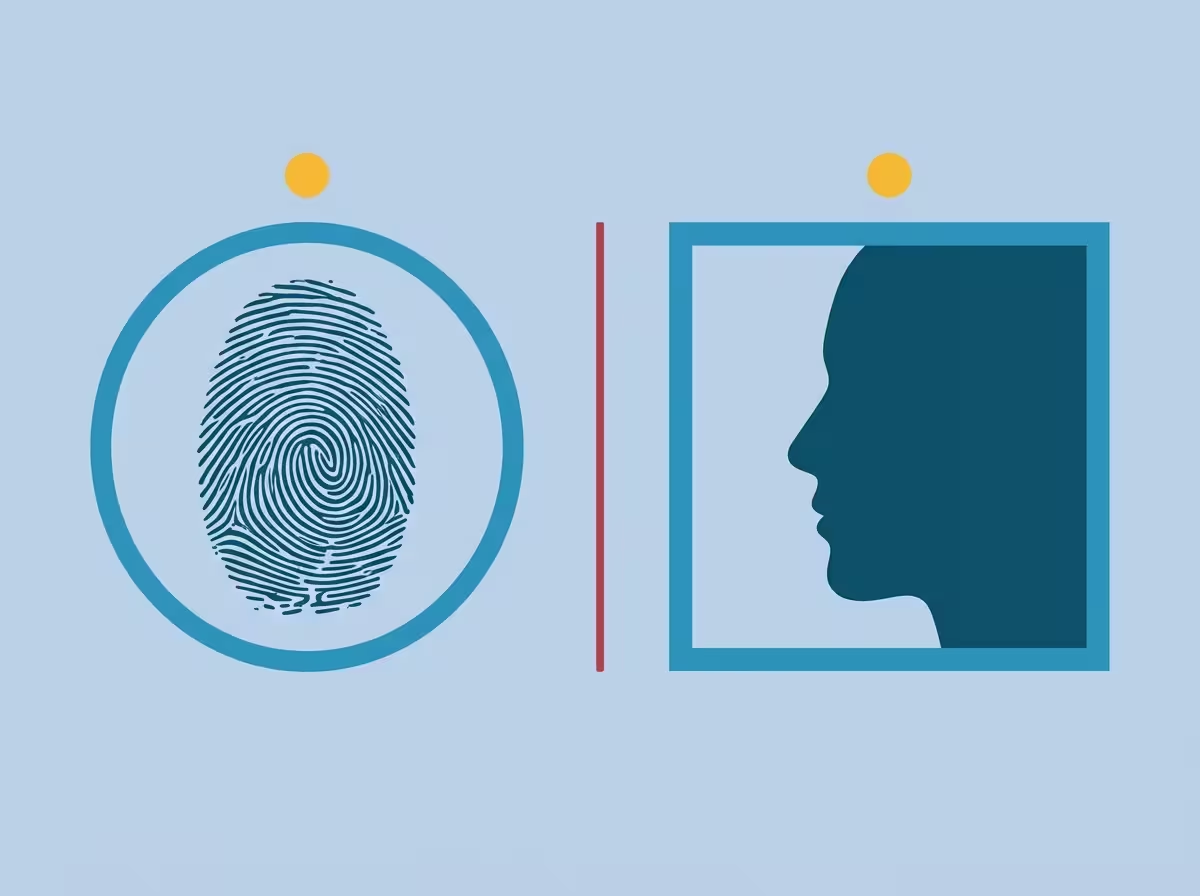
Biometrics identifies a person through physical characteristics that cannot be transferred. There are two main solutions on the market: fingerprint and facial recognition. Retina and palm scanners technically exist, but they are rarely used in the commercial sector in Georgia.
Fingerprint Reader
This is the oldest biometric technology—stable and field-tested. The reader scans the papillary pattern of the finger; the software compares it to the template in the database and returns a response in 0.5–1 seconds. The accuracy of modern devices exceeds 99.5%, and false positives are rare. A fingerprint reader for an office can be purchased starting from approximately 350 GEL, while premium models start from 800 GEL.
Weaknesses: Dirty hands, cuts, and injuries reduce recognition accuracy. In an industrial environment where mechanical work is performed, this becomes a real problem—at the end of the workday, some employees’ fingers are poorly read. In hygienically sensitive fields (medicine, food production), contact readers raise additional questions. This is precisely why, in such cases, there is often a shift to facial recognition.
Facial Recognition Reader
The camera captures an image of the face, and a neural network compares its geometry to the template in the database. Recognition requires 0.3–1 seconds, and the employee passes through without stopping. The technology is contactless, does not compromise hygiene, and does not interfere with working in gloves. The installation of a facial recognition reader for an office can be ordered starting from approximately 600 GEL.
Modern facial recognition readers work in low-light conditions, even with glasses and minor changes in appearance (beard, hairstyle). A mask that covers half of the face reduces accuracy, but it does not block recognition entirely. The accuracy of the best models, according to manufacturer tests, reaches 99.7%. Real-world accuracy depends on lighting and the reader’s mounting angle and is verified during the first week of installation.
When to Choose Biometrics
Small and medium-sized offices where personal accountability for access is important. Server rooms, accounting departments, executive offices, and meeting rooms with confidential information. Facilities with a requirement for time tracking, where transferring a pass is prohibited. On production sites where employees work in gloves, priority is given to facial recognition.
What is Important Regarding Personal Data
Biometric data is considered sensitive information. Georgian personal data protection legislation obligates a company to obtain consent from employees for the processing of biometrics. This does not block the use of the technology, but it adds a clause to the employment contract and an additional form when hiring an employee. Specific requirements are best verified with a lawyer—this article does not replace legal advice.
Mobile Credentials via Smartphone
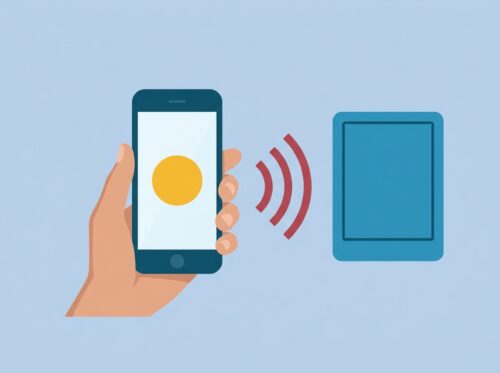
The employee installs an application, receives a virtual pass, approaches the door, and opens it using one of three methods. Bluetooth works at a distance of 3–5 meters, and the door opens without contact. NFC requires bringing the phone to the reader, similar to a card. A QR code is read by a camera installed on the door or by security personnel.
Advantages of Mobile Credentials
A virtual pass is issued in about 30 seconds. A link is sent to a messenger, the employee or guest installs the application, and receives access. Revoking access is just as quick—there is no need to return a physical card. A guest pass is automatically disabled at a set time: it is possible to issue a temporary access for a specific meeting, after which the system will cancel it on its own.
Typical Scenario: A guest is scheduled for a meeting at 14:00 for one hour. The manager sends a WhatsApp link the day before, and the guest installs the app. At 14:00, the guest approaches the turnstile, and the phone automatically opens the gate. At 15:00, the access is automatically disabled without intervention from security.
Cons and Costs
The system depends on the smartphone and its battery charge. If an employee’s phone dies or breaks, access becomes impossible. For high-security facilities, a mobile pass is rarely used as the only method—it is usually accompanied by a physical backup (card or biometrics). Readers with Bluetooth and NFC support are 2–3 times more expensive than standard card readers, and their price starts from approximately 700 GEL.
When to Order a Mobile Access System
Facilities with a high flow of visitors where distributing physical cards is inconvenient. Coworking spaces, shared offices, IT companies with open guest policies. Representative offices of international companies, premium business centers, and facilities with high service requirements. Residential complexes for guest management.
Hybrid solutions: how to distribute different methods for different zones
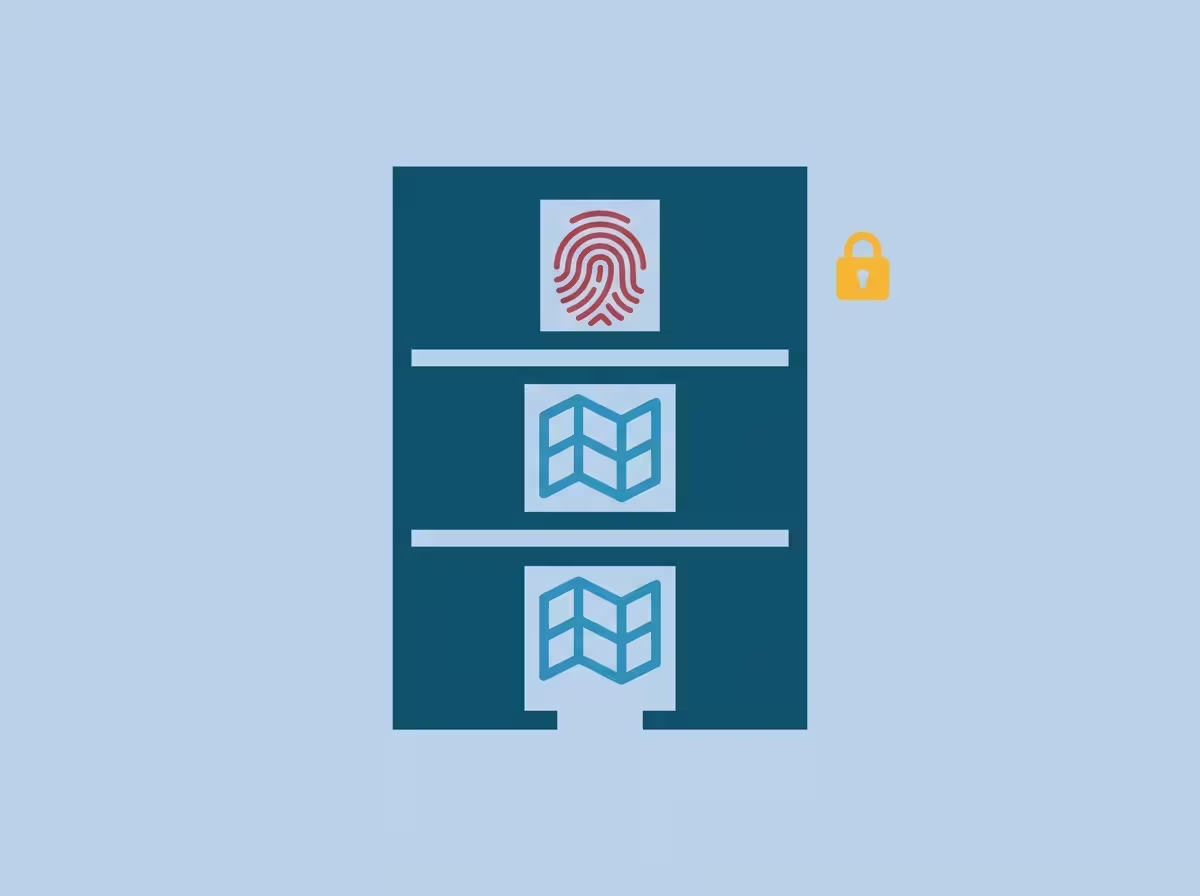
For facilities where zones have varying levels of criticality, a hybrid scheme is used. One method is used for common spaces, another for critical zones. This is sound engineering practice, not redundant system duplication.
Typical configuration for a medium office (50-80 employees)
Cards at the building’s main entrance due to high traffic and the need for speed.
Cards on the floors, as there are many zones, and installing biometrics on every door would make the project prohibitively expensive.
Biometrics (fingerprint or facial recognition) for the server room, the financial director’s office, and the archive.
Mobile passes for guests, issued by the meeting manager via an app.
Production facility configuration
Cards at the checkpoint, as there is high traffic at the start and end of shifts.
Facial recognition for office employees, as they do not face the problem of dirty hands.
Mifare cards for technical personnel and contractors (due to dirty hands or the use of gloves).
A hybrid system increases project costs by 20–40% compared to a uniform system, but it is justified where the difference between security risks and comfort is significant. For a facility where a data leak from the server room could cost a company hundreds of thousands of lari, the installation of biometrics pays for itself with even a single prevented incident.
Solutions for Three Typical Scenarios
10-person office: One entrance door, a meeting room, and a director’s office.
Configuration: Mifare cards at the main entrance and fingerprint biometrics for the director’s office.
Budget: From approximately 1,200 GEL.
Installation: 1 day. (Exact price depends on door type and hardware, calculated after site inspection).
200-person business center: Main entrance, elevator halls, server room, and meeting rooms.
Configuration: Mifare cards at the main entrance and elevators; facial recognition biometrics for the server room and premium meeting rooms; mobile passes for guests via reception.
Budget: From approximately 18,000 GEL.
Installation: 5-10 days including cabling.
Warehouse with production zone: Checkpoint and workshops.
Configuration: Facial recognition biometrics at the checkpoint for office staff and security; Mifare cards for workshop employees (dirty hands, gloves); separate mobile passes for contractors linked to working hours.
Budget: From approximately 8,000 GEL.
Installation: 3-7 days.
What to Prepare Before Ordering a System
Before contacting an integrator, prepare three key pieces of information:
The number of controlled doors and their types (main entrance, common spaces, critical zones).
The average number of employees and daily visitor flow.
Facility specifics (working with gloves, peak traffic flows, requirements for time tracking).
With this data, a call to Innotech will take about 10-15 minutes, and you will gain an understanding of the system’s composition and estimated cost. The exact cost and installation timeline are determined after a specialist visits the site. Site inspection in Tbilisi is free.
If a video surveillance system is already operating or planned for the facility, it is recommended to design it together with the access control system. Integrating access systems with cameras links each access event to a video recording, which is critically important for analyzing disputed situations.
To order specific equipment, see the catalog sections: Access Systems, Biometrics, Card Readers, Locks, and Magnets.
Order access system installation in Tbilisi: +995 595 532 112 Free site inspection.
Author: Morris Melia Co-founder and CTO of INNOTECH, Tbilisi. 25+ years of experience in IT and security technologies. Certified partner of Hikvision, Dahua, Uniview, and Teletek. Holder of Cisco CCNA and VMware VCP certificates. Personally led hundreds of projects for business centers, hotels, residential complexes, and industrial facilities in Georgia.