


Fire Alarm Systems for Restaurants, Warehouses, and Offices: How to Select the Control Panel and Detectors Based on Building Type
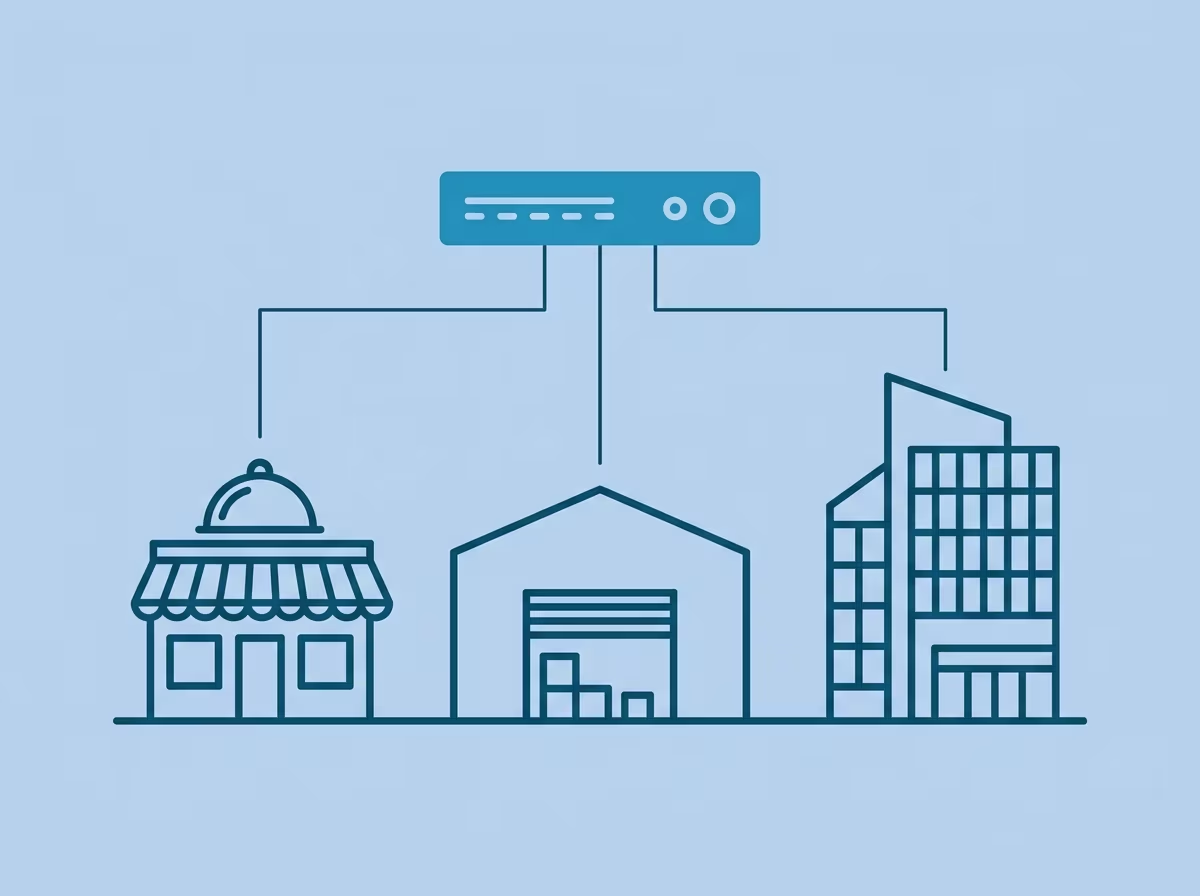
Ensuring fire safety in commercial buildings is a strict legal requirement and a fundamental prerequisite for protecting any business.
Restaurant owners, managers of warehouse complexes, and heads of office spaces are directly responsible for protecting the lives of employees and visitors, as well as the integrity of valuable property and infrastructure. Errors made in the design of fire alarm systems or a superficial approach to equipment selection can lead to catastrophic results: from significant fines imposed by regulatory bodies to the complete loss of assets in the event of an actual fire.
The main mistake many clients make is attempting to use standard, off-the-shelf solutions for facilities with completely different characteristics. The logic of protecting a commercial kitchen fundamentally differs from the design principles for the security of a logistics terminal or a multi-story business center. Each space has its own unique sources of risk, temperature conditions, area, and internal layout. For an investment in safety to be worthwhile, it is essential to clearly understand how to select the right central device and detector types based on your business’s specific requirements. In this article, we will examine the specific features of fire alarm system design for three main types of commercial buildings in detail and in plain language.
Three Types of Commercial Spaces — Three Fundamentally Different Security Challenges
For a fire alarm system to work effectively, it must be highly sensitive to real threats while being fully protected from false alarms. While the appearance of a small amount of smoke in an industrial warehouse is a sure sign of an accident, in a professional restaurant kitchen, the steam, heat, and smoke coming from grills or ovens are a natural part of the workflow. This is why the design process always begins with a detailed analysis of the facility’s specific characteristics.
Specifics of the Restaurant Industry and Food Service Sectors
In restaurants, cafes, and bars, the kitchen is the primary risk zone. The constant operation of heating equipment, stoves, ovens, and grills creates a specific microclimate. If a standard detector that reacts to air transparency is installed here, the establishment will face constant false alarms. This will not only paralyze kitchen operations but also lead to the regular evacuation of guests from the dining room, which will instantly damage the brand’s reputation and cause colossal losses.
Key Safety Characteristics of Warehouses and Logistics Facilities
Warehouses are characterized by vast open spaces, high ceilings, and a high density of stored goods. The main challenge here is that in the event of smoke at floor level, the warm air and smoke must travel 6–12 meters to the ceiling, where detectors are usually installed. Additionally, warehouses are often unheated, and the movement of heavy handling equipment can kick up dust. This requires devices with high signal permeability and the ability to accurately pinpoint the source of a fire across a large area.
Security Requirements for Office Spaces and Business Centers
Modern offices focus on high personnel density and an abundance of expensive computer equipment, servers, and complex cabling located in raised floors and suspended ceilings. The main challenge in the office sector is detecting the hidden smoldering of cables as early as possible (before an open flame appears) and ensuring the immediate, organized evacuation of people from corridors and offices.
Understanding these fundamental differences greatly simplifies a manager’s task in evaluating the technical proposals presented by system integrators. If you need to design a reliable protection system, it is important to order a correctly configured fire alarm panel in a timely manner and select appropriate detectors that will function properly under the specified conditions.
Why do you need a heat detector in a kitchen but a smoke detector in a cellar?
The efficiency of the entire system depends directly on the correct distribution of end devices—the sensors. In modern automation practice, two main types of devices are used, each of which is specifically designed for its own area of responsibility.
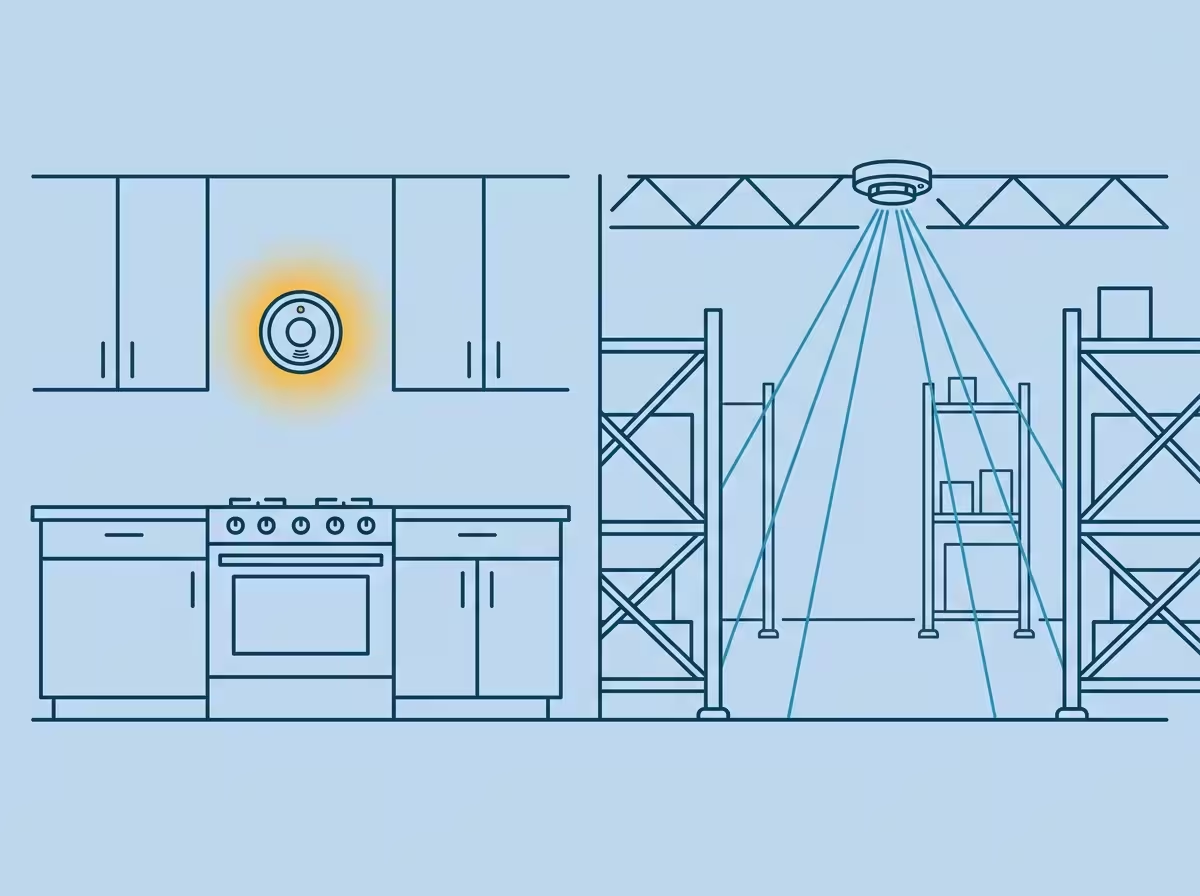
Opto-electronic smoke detectors (a prime example is the addressable SensoIRIS S130 detector) detect the presence of smoke particles in the air within an internal chamber using infrared radiation. This is an ideal solution for offices, corridors, server rooms, and warehouses where a fire at an early stage usually manifests in materials undergoing a combustion process (paper, textiles, plastic cable insulation). A smoke detector will activate long before the room temperature begins to rise, providing valuable time for fire suppression efforts.
However, in restaurant kitchens or smoking areas, smoke detectors are ineffective due to the constant presence of cooking steam and aerosols. For such areas, a specialized heat detector is used—for example, the SensoIRIS T110 model. This device completely ignores smoke, steam, and particles dispersed in the air. It reacts only to two factors: exceeding a set temperature threshold (e.g., temperature rising above 58 degrees) or an abnormally rapid rise in heat in the room. The installation of heat detectors in kitchens ensures absolute operational stability without false alarms, while maintaining a high level of protection.
To purchase the correct type of addressable smoke or heat detector, always match the specific purpose of the room to the sensor’s operational characteristics and integrate the devices within a single space to achieve the best results.
How to Correctly Calculate the Number of Zones and Select a Fire Alarm Control Panel
The central component of any automatic fire protection system is the control panel. All cables from detectors, call points, and sounders converge here. The panel continuously monitors the status of the circuits, powers the detectors, and, in the event of an alarm, activates notification and fire suppression systems.
When selecting central equipment, the main parameter is its capacity, which is measured by the number of supported zones or circuits. The market offers devices of various scales: from compact units designed for a few zones (e.g., MAG 2P or MAG 4P series panels) to higher-capacity solutions, such as the MAG 8P panel, which provides flexible structuring for medium-sized facilities.
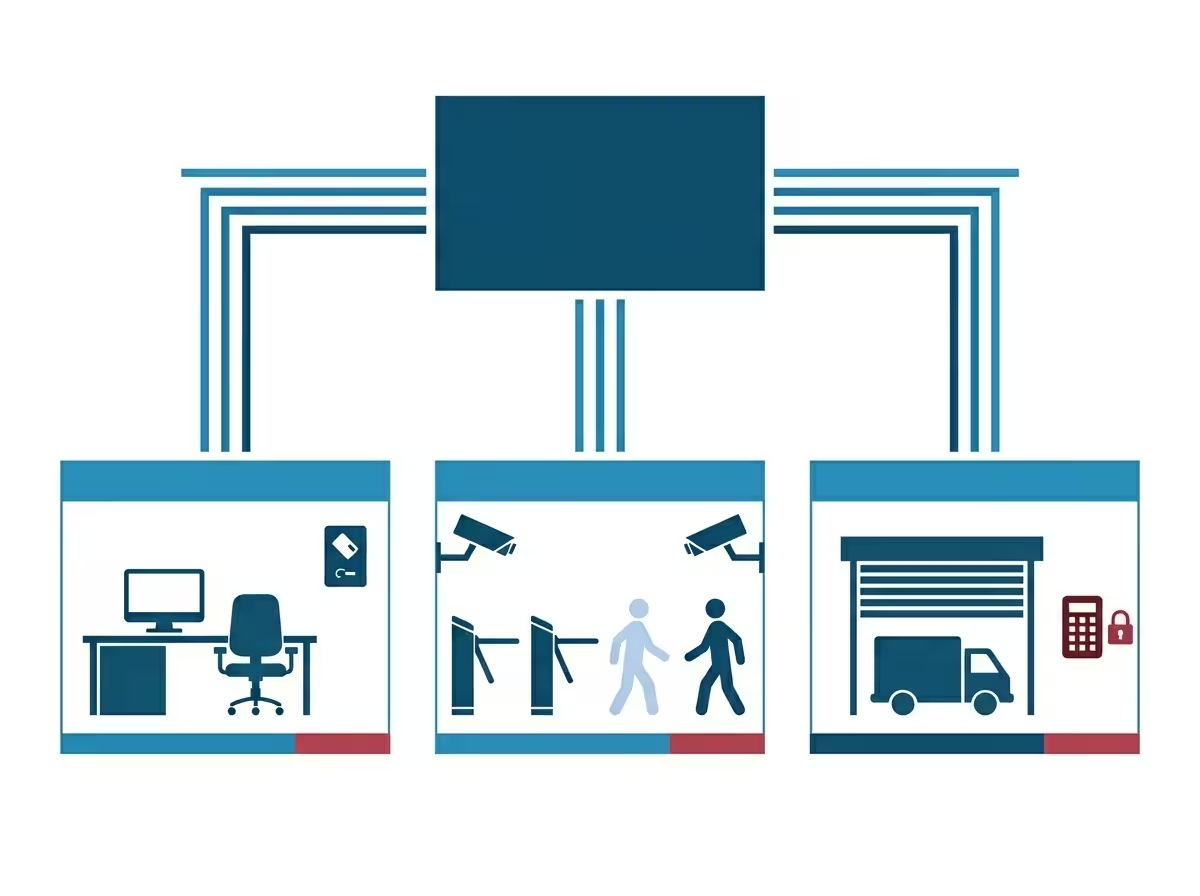
Correct zoning is critically important for two reasons:
Precise localization: If an entire floor of a building, containing numerous offices, is connected to a single zone, the control panel will only show a general floor alarm when a sensor is triggered.
The security team will be forced to manually check each room to find the source of the smoke, which will cost them valuable minutes. Subdividing the building into independent zones (for example, using a MAG 8P control panel) allows you to instantly pinpoint which specific room is affected.
System scalability: A professionally designed system must always have free capacity (at least 20-30% free slots on the loops).
This allows you to easily expand the system in the future with new detectors—whether it’s an office reorganization, warehouse expansion, or the addition of a new building—without the need to purchase a new, expensive control panel.
If you are facing the task of automating your business security, you will need to carefully plan the network architecture and select fire alarms, detectors, and a control panel that are fully adapted to the scale of your commercial space.
The Role of Visual and Audio Warning Systems: When Is Targeted Alarm with a Strobe Necessary?
Detecting a fire is only half the battle. During an emergency, it is crucial to provide information about the danger in a timely, loud, and clear manner to everyone in the building. For this purpose, powerful audio and visual warning devices are integrated into the general automation system.
In modern commercial buildings, especially in places with high background noise (production workshops, restaurant kitchens with active ventilation systems) or areas where many people gather (common areas, shopping galleries, large open-plan offices), a standard audible signal is often insufficient. Under such conditions, a specialized addressable alarm with a stroboscopic effect, such as the SensoIRIS WS model, becomes an indispensable element.
The strobe generates frequent, bright flashes of pulsed light, which are clearly visible both in heavy smoke conditions and when personnel are wearing noise-canceling headphones. The addressable connection type allows the control panel not only to supply electricity to the siren but also to constantly monitor its operational status, line integrity, and readiness in the background. The use of certified devices ensures the timely delivery of signals, which prevents panic and ensures a fast and organized evacuation.
Expert Design and Integration of Fire Alarm Systems
Fire alarm systems belong to complex life-safety engineering systems, which are subject to strict international and local technical regulations. The process of designing such systems leaves no room for negligence and consists of clear, sequential stages aimed at achieving absolute reliability.
Everything begins with a detailed study of the facility by engineers: they investigate the building’s fire loads, evacuation routes, and ventilation channel characteristics. Based on this data, a project is prepared in which the installation location of each detector, the routes for laying fire-resistant cables, and backup power parameters are mathematically calculated. Special attention is paid to commissioning: specialists set up scenarios for the automatic interaction of the fire alarm panel with other engineering systems—for example, in the event of an alarm, the ventilation must automatically shut off to prevent the spread of fire, and electromagnetic locks installed on exit doors must instantly open so that people can leave the building without hindrance.
To ensure the project is executed to the highest standards, it is vital to entrust the work to experienced professionals. A comprehensive approach, the use of certified equipment, and regular technical maintenance are the only ways to guarantee that in a critical moment, automatic systems will work flawlessly and protect your business and human lives.
Recommended Sections and Useful Resources:
Fire Alarm Systems Catalog — A comprehensive list of certified devices, control panels, and detectors for commercial facilities.
Central Management, MAG 8P — A reliable and high-performance control panel for distributed security systems.
Detectors, SensoIRIS S130 — High-precision device for early detection of combustion in offices and warehouses.
Audio and Visual Indicators, SensoIRIS WS — Professional emergency alarm device with a stroboscopic effect.
Regulations and Standards — Read our expert blog post from May 21st — a detailed overview of EN54 international safety standards and system design regulations for business in Georgia.
Official Integrator Resource: You can read case studies, view our portfolio of completed projects, and order full security automation services directly on the Innotech.ge website.
+995 595 532 112
Author: Morris Melia Co-founder and CTO of INNOTECH, Tbilisi. 25+ years of experience in the field of IT and security technologies. Certified partner of Hikvision, Dahua, Uniview, and Teletek. Holder of Cisco CCNA and VMware VCP certificates. Personally led hundreds of projects for business centers, hotels, residential complexes, and industrial facilities in Georgia.