

Ajax vs. Wired Alarm Systems: What to Choose and Buy for Your Property
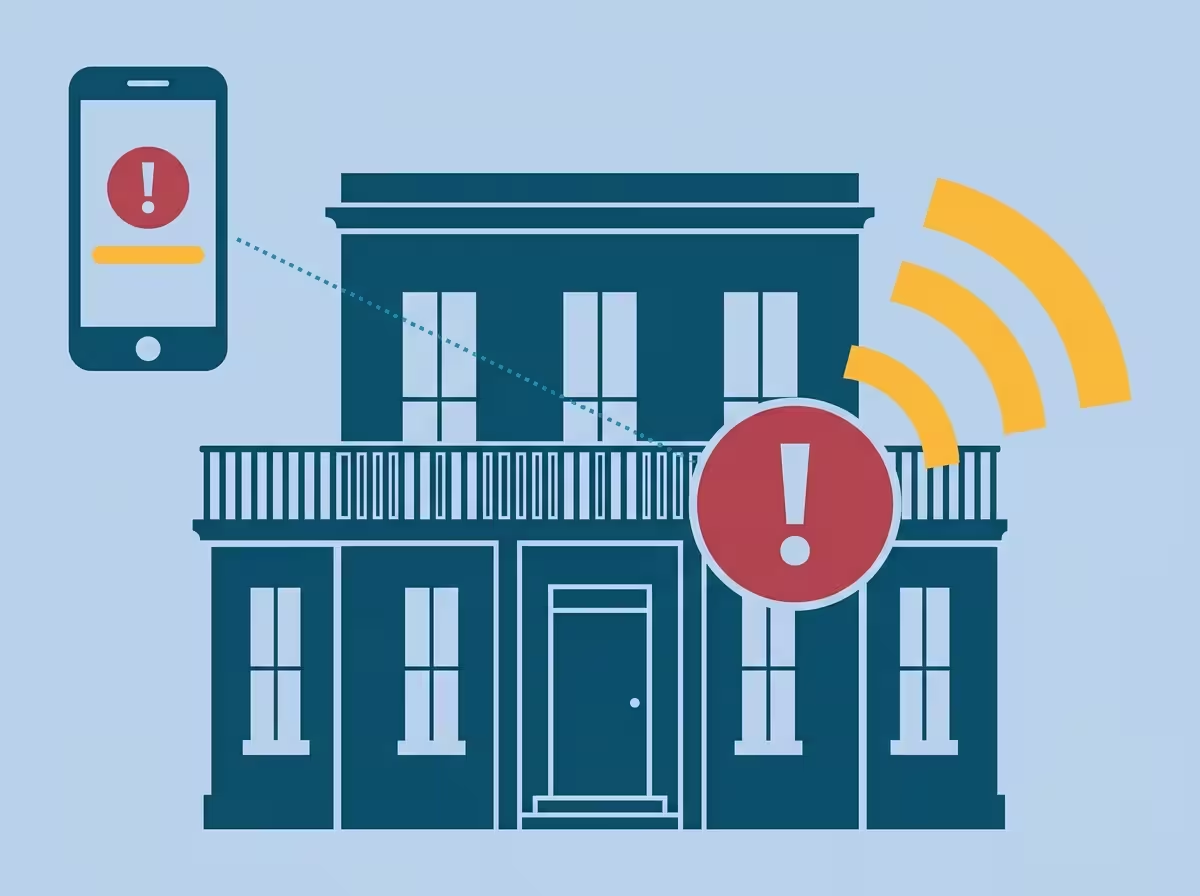
Choosing a security alarm system in Georgia practically always begins with one question: Ajax or not?
The brand has already become a generic name — much like Xerox is for copying technology.
Ajax certainly has grounds for its market dominance: it is a Ukrainian system with high build quality, a user-friendly application, and wireless installation in a single day. However, this does not mean that Ajax is ideal for every property.
The alternative is classic wired systems. They operate more consistently, are often cheaper to operate, and are more reliable for large and complex properties. Installation requires more time, and the cost can be either lower or higher than Ajax, depending on the number of detectors and the length of the cable runs.
This article examines both technologies, shows where each works optimally, and will help you determine what to order for an apartment, private house, or office. If you are planning to integrate cameras with the alarm system, see the additional article.
The main difference between wireless and wired alarm systems
AJAX Wireless System
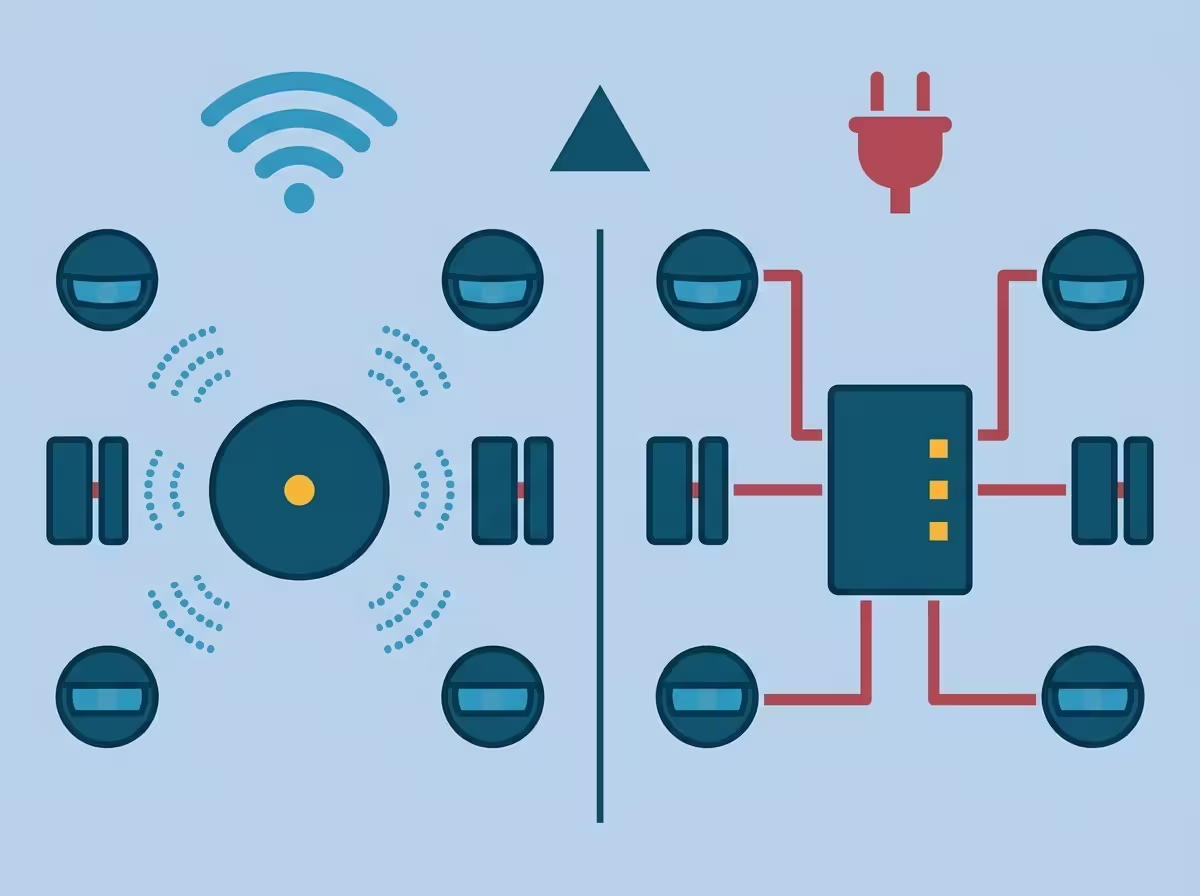
The hub and detectors are connected via a radio signal on a special frequency (AJAX Jeweller). Each detector operates on a battery with an average lifespan of 5-7 years. The connection is encrypted and protected against both interception and jamming. The hub connects to the internet via Wi-Fi, an Ethernet cable, or a built-in GSM module for a SIM card, which provides a backup channel.
Installation mainly involves mounting the hub on the wall, placing the detectors at the necessary points, and pairing them via the application. There is no need for wall chasing or cable routing. A two-person team can install the system in an apartment in 3-5 hours, and in a private house — in one day. This is a critical advantage for finished renovations.
Weaknesses of the Wireless System
In facilities with thick concrete walls or large areas, signal repeaters (AJAX ReX) may be required, which increases the kit’s cost. In areas with strong radio interference — for example, in a metal hangar or near transmission towers — the wireless connection may be unstable.
Detector batteries require replacement—rarely, but still. For a 15-detector system, after the first 5 years of operation, an average of 1-2 replacements per year is required.
Wired System
Each detector is connected to the central control panel with a separate cable. Both the alarm signal and power are transmitted via the cable — batteries are not required.
Strengths of the Wired System
Strengths of the Wired System
Complete independence from the radio spectrum—the system cannot be blocked and does not depend on a neighbor’s Wi-Fi. Detector power is centralized, so there is no issue of battery depletion. For large facilities and high-demand projects—banks, warehouses with valuables, certified facilities—the wired system remains the standard.
Weaknesses of the Wired System
Installation takes 2-5 working days. It requires wall chasing or routing cables through cable channels. In a finished apartment, this means either using decorative boxes or partially removing the finish.
What this means in practice
For a 50–100 square meter apartment after renovation — definitely AJAX or another wireless system. Installation in one day, without dust or having to redo the finishes.
For a 150–250 square meter private house during the construction stage — the choice between wired and wireless depends on budget and convenience; both technologies work effectively.
For a commercial facility larger than 500 square meters where compliance with certification requirements is necessary — a wired or hybrid system is recommended.
To order an alarm kit for an apartment or house, see the section — “Alarm Kits”.
What is included in an AJAX kit for an apartment, house, and office
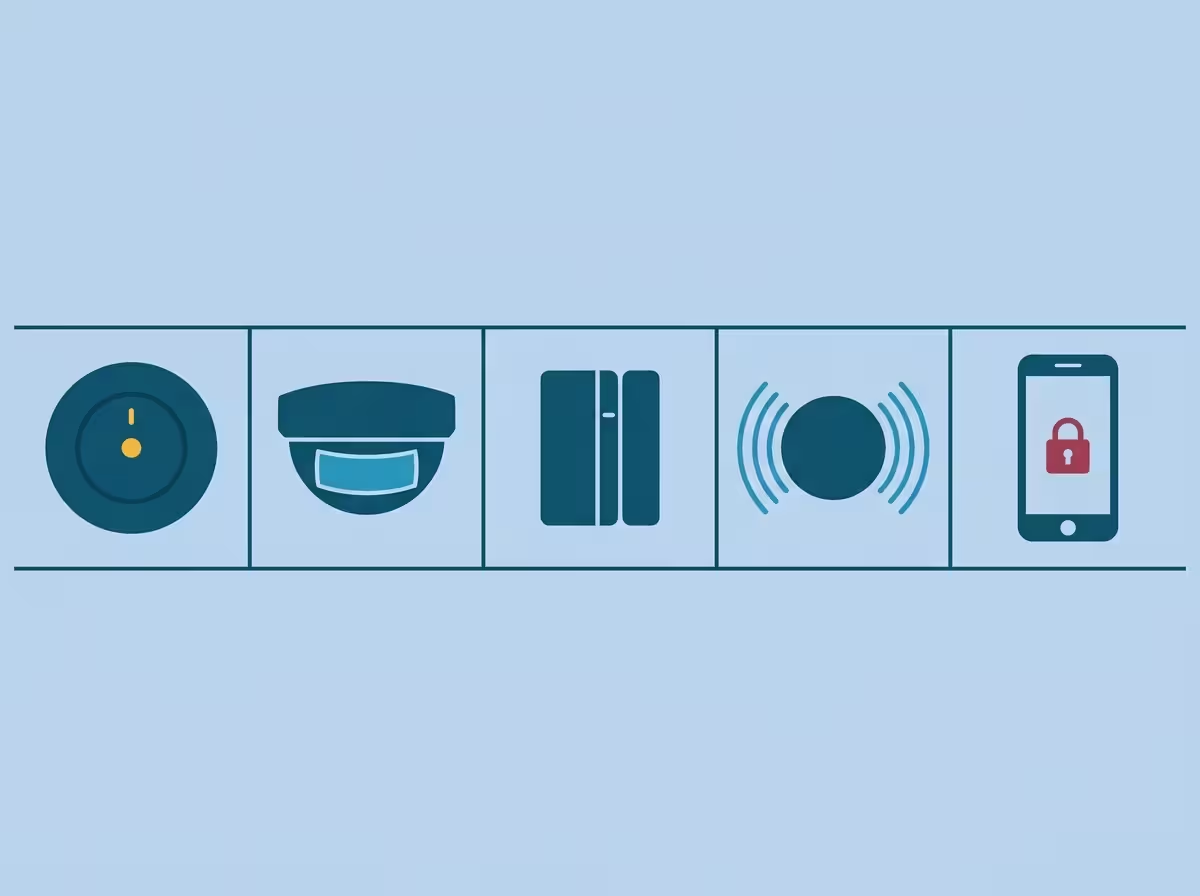
A security alarm system, whether wireless or wired, consists of five types of components. The basic architecture is the same; only the number and characteristics of the devices change.
Hub or control panel
The central device of the system. It receives signals from all detectors and sends an alarm to the owner’s smartphone and the security company’s monitoring station. The basic AJAX model is the Hub 2, while the premium version is the Hub 2 Plus, which supports more devices and backup communication channels. In wired systems, panels from Teletek, Paradox, DSC, and other manufacturers are used. The price of an AJAX hub for an apartment starts from approximately 350-500 GEL, with premium models ranging from 700-900 GEL.
Motion detectors
React to motion in the room via an infrared sensor. Installed in the corner of a room at a height of 2-2.5 meters. Modern AJAX detectors—MotionProtect and MotionProtect Plus—distinguish between humans and pets, which significantly reduces false alarms.
Opening detectors
Installed on the door and window frame. The magnet is placed on the moving part, the main module—on the frame. Upon opening, the magnet moves away, and the system sends a signal.
Siren
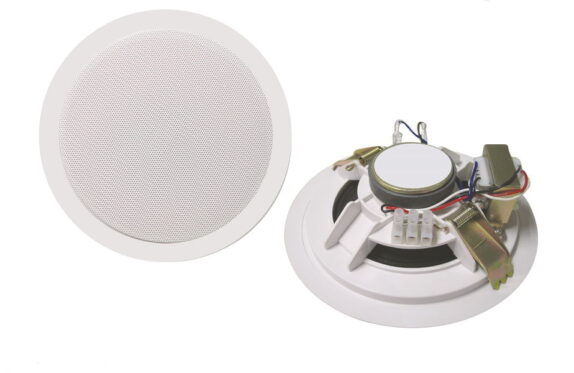
Provides an audible alarm and scares off the intruder. An indoor siren (HomeSiren) is installed in a hallway or near a door, while an outdoor siren (StreetSiren) is installed on the facade. The noise level is 95-105 decibels. According to legislation, the operating time is limited, usually to 3 minutes per cycle.
Control via remote or application
The system can be armed and disarmed in three ways:
Via the AJAX app from a smartphone;
With a SpaceControl key fob;
With a KeyPad using a PIN code.
Basic kit for a 2-3 room apartment
Hub;
2-3 motion detectors;
2-4 opening detectors for doors and first-floor windows;
One indoor siren.
Basic kit for an 80-150 m² office
Hub with remote administration support, 4–6 motion detectors in main zones, 3–5 opening detectors on doors and windows, indoor siren, KeyPad with PIN codes for employees, and an alarm button under the administrator’s desk.
To order individual components to expand the system, see the sections — “Detectors” and “Sirens and Buttons”.
When is AJAX not the right choice and a wired system is needed
Large and Complex Facilities
In facilities larger than 800–1,000 m², the wireless signal loses stability. Thick walls, metal doors, and elevator shafts create zones with weak reception. AJAX ReX signal repeaters partially solve the problem, but for a system with 25–40 detectors, the project becomes so complex and expensive that a wired system becomes more logical. Typical examples:
A 2,000 m² industrial building;
Warehouses with high storage racks;
A 50-room hotel.
Certified Facilities
Banks, jewelry stores, government facilities, and warehouses for pharmaceuticals or other licensed goods. In such facilities, the following are typically used:
Fully wired Teletek, Paradox, or DSC systems;
Or a hybrid system with wired critical zones. AJAX, as a complete system, rarely meets these requirements.
Facilities with High Radio Interference
Manufacturing workshops with heavy electrical equipment, facilities near telecommunication towers, metal hangars, and storage facilities with high metal content. Under such conditions, the wireless signal is unstable, which may lead to false alarms and missed signals. The solution is a wired or hybrid system, where wireless detectors are installed in radio-clean zones of the facility, and critical points are connected via wire.
To order the installation of a wired or hybrid system for a complex facility, see the general section — “Security Alarms.” Selection is made after a site inspection.
Integration of Security Alarm Systems with Other Systems
Modern security alarms no longer work in isolation — they become part of the facility’s overall security infrastructure.
Integration with Video Surveillance
Night scenario: A motion detector in the office corridor is triggered at 02:47. The AJAX hub sends a push notification to the owner, and the video recorder initiates priority recording from the corresponding camera. The owner sees the alarm in the app and checks the situation in real time. The decision is made within 30–60 seconds — whether it is a real intrusion or a false alarm. AJAX integrates with video surveillance systems using standard protocols, and cameras are visible directly in the application.
Integration with Smart Home Systems
In the morning, when the system is disarmed, the lighting in the entrance automatically turns on, the air conditioner exits night mode, and the curtains open. In the evening, when arming the system, the lights in the rooms turn off with a 30-second delay, the heating system switches to economy mode, and access points are locked. These are scenarios for premium apartments or private houses with integrated automation. AJAX supports integration with Apple HomeKit, Google Home, and KNX systems. Equipment and scenarios are selected at the design stage. To see smart home devices, see the section — “Smart Home.”
Integration with Monitoring Companies
In the event of an alarm, the signal goes not only to the owner’s smartphone but also to the security company’s monitoring station. Within 5–15 minutes, a rapid response team arrives at the site. This is standard practice for:
Apartments;
Private houses;
Offices and commercial facilities.
Solutions for Four Typical Facilities
1. 1–2 Room Apartment in Tbilisi
AJAX Hub basic model, 1-2 motion detectors, 1-2 opening detectors, and an indoor siren.
2. Private House of 100–200 m²
AJAX Hub 2 Plus with two SIM cards, 3-5 motion detectors, 4-7 opening detectors, indoor and outdoor sirens, and a keypad.
3. Office of 80–150 m²
Hub with support for zones and users, 4-6 motion detectors, 3-5 opening detectors, keypad with PIN codes, and a panic button.
4. Large Facility, Bank, or Warehouse
Wired or hybrid system from Teletek, Paradox, or another certified manufacturer. Project design is completely individual.
What You Should Define Before Ordering an Alarm System
Type and area of the facility;
Status of renovations;
Whether integration with cameras, Smart Home, or access control systems is needed;
Whether connection to a security company’s monitoring station is planned.
With this data, a call to Innotech will take about 10–15 minutes, and you will receive an understanding of the system’s composition and estimated cost. A precise cost estimate is drawn up after a specialist’s visit. Site inspection in Tbilisi is free. If you are also planning to install a video surveillance system, it is recommended to plan both systems in one project.
To choose equipment, see the catalog sections:
Order security alarm installation: +995 595 532 112
Author: Morris Melia Co-founder and CTO of INNOTECH, Tbilisi. 25+ years of experience in IT and security technologies. Certified partner of Hikvision, Dahua, Uniview, and Teletek. Holder of Cisco CCNA and VMware VCP certificates. Personally led hundreds of projects for business centers, hotels, residential complexes, and industrial facilities in Georgia.